
8 Automated Voicemail Messages: Templates for 2026
Eight automated voicemail messages with ready-to-use scripts for trades, salons, real estate, and law firms, plus tips on length, tone, and calls to action.
The phone rings when nobody can answer, and the next message decides whether that caller waits, texts back, or moves on. A roofer on a ladder, a salon full of clients, a lawyer in court, a plumber under a sink, they all face the same problem. Missed calls aren't just missed calls anymore, because the voicemail either recovers the lead or lets it vanish.
Automated voicemail messages work best when they do one job well. They greet clearly, collect the right details, and point the caller to the next step without wasting time. The strongest versions feel simple on the surface, but they're built around a specific call type, a specific outcome, and a specific failure point.
1. Standard Greeting with Callback Request
A standard greeting is still the safest default because it gives the caller a clean path forward. It says who you are, confirms the line is unavailable, and asks for the name, number, and reason for calling. That's enough to turn a dead call into something your team can work with.
Practical rule: Ask for one detail at a time. Long lists sound neat on paper, but callers often drop off before they finish.
A good version sounds like this, in plain language: “Thanks for calling Riverside Plumbing. We're on another job right now. Please leave your name, number, and a brief description of the issue, and we'll call you back within two business hours.” That works because it sets a promise the business can keep, and it doesn't overload the caller.
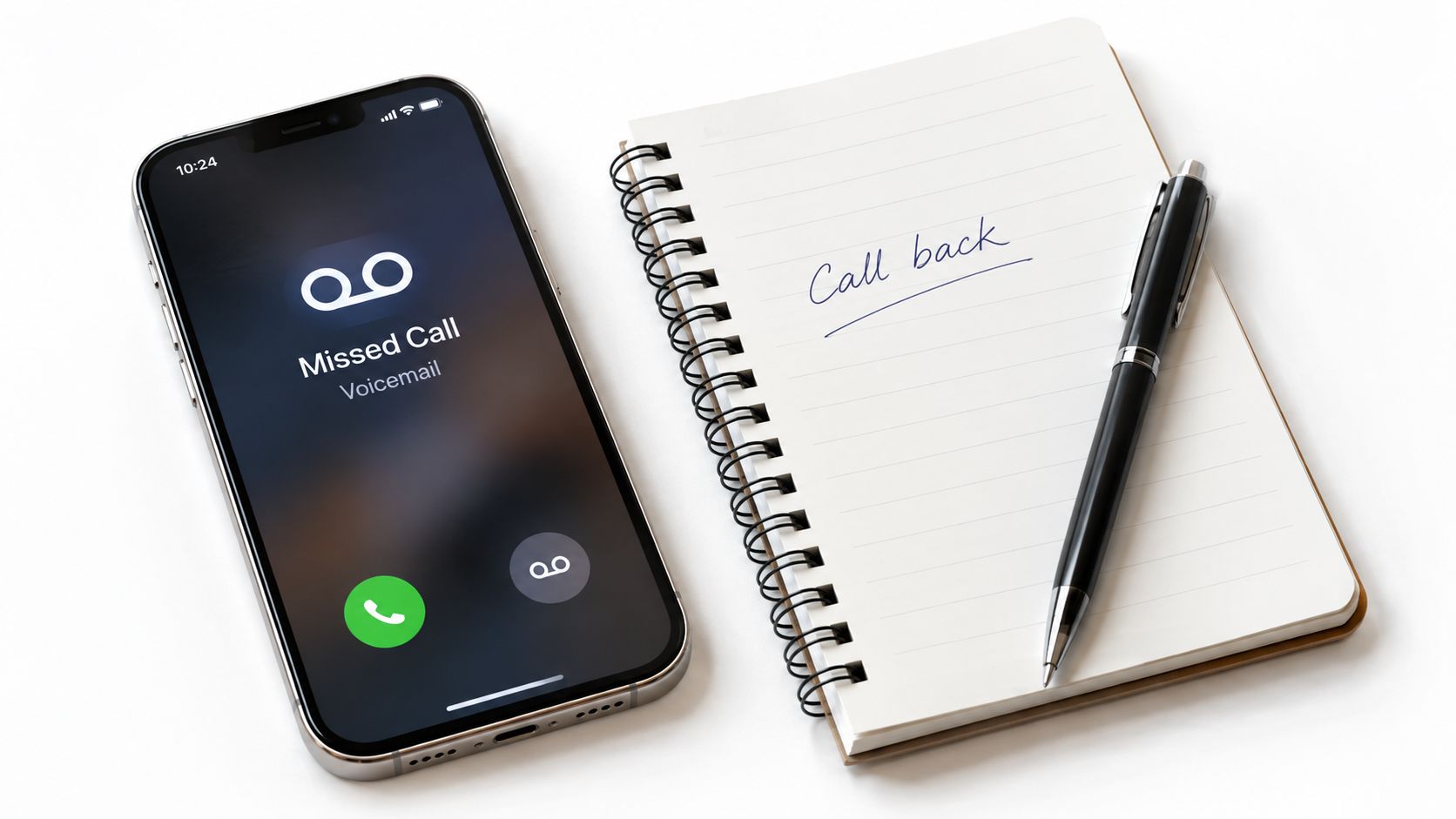
The core job here is to avoid a dead end. The historical shift from machine-based answering to network-based voicemail turned missed calls into stored messages that could be returned later, which is why this pattern still matters for small businesses today, as described in the history of voicemail's move into centralized systems in this overview of voicemail's evolution. SkipCalls fits this workflow because it can answer calls and texts without making customers learn a new number.
Pair this with an automatic text-back if you can. A caller who gets a confirmation right away is less likely to call the next business on their list.
2. After-Hours Greeting with Next-Step Options
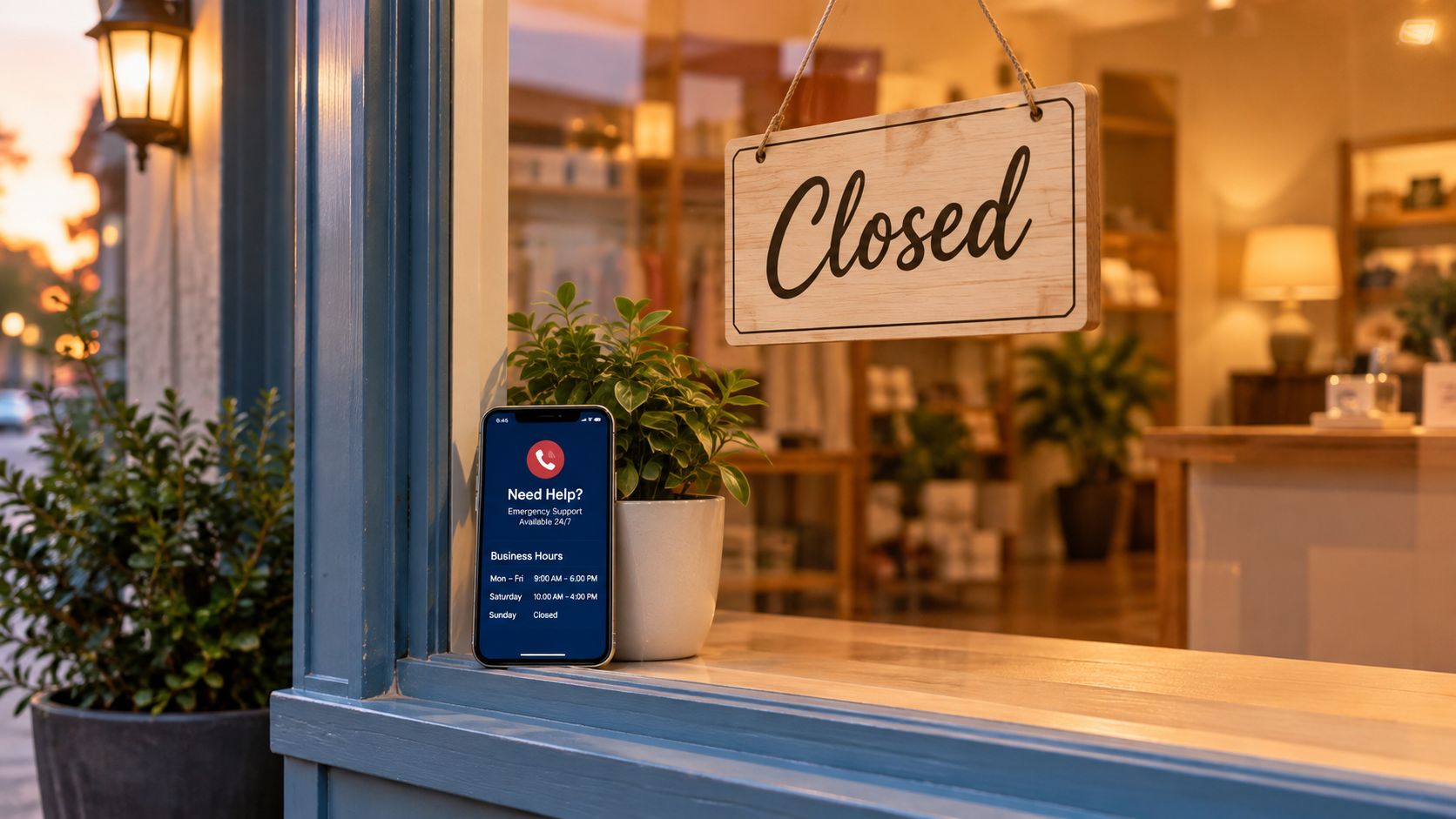
After-hours voicemail should sound different from daytime voicemail. The caller already knows nobody is picking up, so the message needs to say when you reopen and what to do if the issue cannot wait. That matters for trades, salons, real estate, insurance, and law, where evening calls often carry more urgency than office-hour calls.
A strong after-hours script gives the caller a clear choice without turning into a maze. A solo electrician can say, “We're currently closed. For a power outage or electrical emergency, press 1. For everything else, leave a message or text this number, and we'll respond at 8 a.m. Monday.” A salon can offer a text link for next-day booking after 7 p.m. so callers do not sit on the line waiting for a callback.
Callers also bring in hours they found elsewhere, including AI search results, which is why it helps to read why AI search gets business details wrong before you record your closing time. If your voicemail says one thing and your public listings say another, the caller loses confidence fast.
Routing matters as much as wording. A Midwestern financial-services office cut front-desk intervention sharply and nearly eliminated coverage gaps after moving to a VoIP-based interactive voice-response system that identified the issue, played the right message, and offered a transfer or a return to the main menu as documented in the case study. That is the point of the first choice in the menu. Make the urgent path easy to reach, and keep the generic path second.
Keep the emergency option first. If the caller has a true problem, every extra keypress raises the chance they hang up.
Review these messages monthly, and again after holidays. People call differently on a Friday night than they do on a Tuesday morning, and your voicemail should reflect that.
3. Appointment-Booking Voicemail
Booking-focused voicemail works when the call is really a scheduling request. That's common in salons, spas, roofing, HVAC, and other service businesses where the next available slot matters more than a long explanation. Instead of asking callers to wait for a return call, you ask for the details needed to book the visit.
A useful example sounds like this: “You've reached Bloom Studio. To book a color or cut, leave your name, the service, and two times that work. Or book instantly at the link we just texted you.” A roofing company might ask for the property address and a preferred inspection window. Both versions reduce back-and-forth because the team gets the key scheduling inputs in one pass.
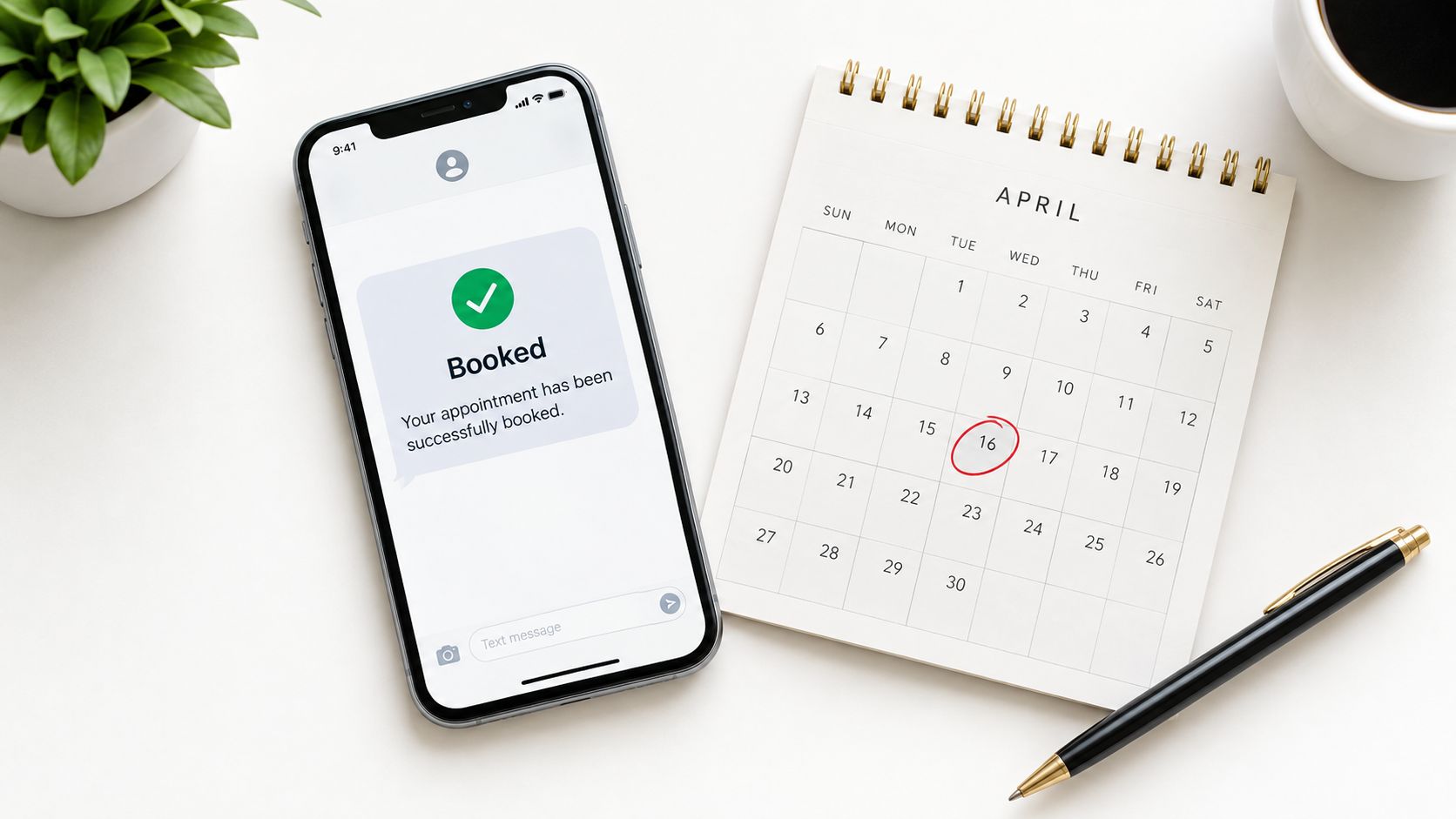
The best booking voicemail asks for the service type early. That lets your team match appointment length, staff skill, and visit type before anyone spends time calling back. It also helps if you send a confirmation text after the request, because callers know the message landed.
SkipCalls' appointment flow is built to move booking requests into the schedule and the customer record without changing the business number, and its appointment scheduling feature supports that kind of handoff. For shops that live and die by their calendar, that's usually the point where voicemail becomes part of the booking system instead of a dead-end mailbox.
4. Lead-Qualification Voicemail for Real Estate and Insurance
Qualification voicemail should sort serious prospects from casual callers without sounding nosy. Real estate and insurance are the clearest examples, because the callback value can be high, but the first question is really, “What kind of lead is this, and how fast do we need to respond?”
A real estate team might say, “Thanks for calling Harbor Realty. Press 1 if you're looking to buy, 2 to sell, or 3 to rent. Then leave your name, your budget or price range, and when you'd like to move.” An auto and home insurance agency can ask whether the caller wants a new quote or a policy review. Those answers help the office call the hottest lead first.
Keep the questions short. Put the most important one first. The goal is enough detail to route the lead, not a full intake that makes the caller hang up before finishing.
Never ask for sensitive data in voicemail. Social Security numbers, full financial details, and health information belong in a secure intake flow, not in a message that might be overheard.
SkipCalls' lead capture solution works well for this pattern because it can qualify leads on calls and texts, then surface the hot ones fast enough for a same-day response. If you want stronger call-back language for the follow-up itself, review proven follow up script templates before launch. If your voicemail collects the right lead data but nobody returns the call quickly, the script did its part and the workflow failed. Set a same-day callback rule for any lead tagged 1 or 2 in the menu, and route everything else to next-business-day follow-up.
5. Emergency Triage Voicemail for Home Services and Law Firms
Emergency triage voicemail is about speed, not politeness. When a caller has a burst pipe, a gas smell, an arrest, or a court date closing in, the message has to separate life-safety issues from everything else. The business needs a clean emergency lane, and the caller needs to know exactly when to stop waiting and act.
A water-damage restoration company can say, “If you have active flooding or a gas smell, hang up and call 911 first, then press 1 to reach our emergency technician.” A criminal defense firm might say, “If you are currently in custody or have a court date in the next 48 hours, press 1. Leaving a message does not create an attorney-client relationship.” Both messages do one thing well, they point the caller to the right path before the voicemail becomes a bottleneck.
The biggest operational mistake is a broken forward. If the emergency line fails, the caller loses trust immediately, and your voicemail has made the problem worse. That's why the route has to be tested regularly, not assumed to work because it worked last month.
Use the emergency after hours triage setup as a model if you want a cleaner handoff for urgent calls. For urgent cases, an AI receptionist can flag the right keywords and call the on-call team by phone, which is better than hoping someone hears the voicemail in time.
6. Compliance-Aware Voicemail for Debt Collection
Debt collection voicemail is where a casual script can become a legal problem fast. In the United States, the Fair Debt Collection Practices Act and Regulation F limit what a collector can say in voicemail, and the safe version is much narrower than many business owners expect. The message should identify the caller and request a callback, but it should not reveal the debt, balance, or creditor to anyone else who hears it.
A compliant example sounds like this: “This message is for [name]. This is [agent name] from [company]. Please call us back at [number]. This is a communication from a debt collector.” That's brief on purpose. It identifies the caller, avoids exposure, and gives the recipient enough context to respond.
Call volume matters here too. Regulation F includes a presumption that more than seven call attempts within seven days about a particular debt may be harassment, so logging attempts is not optional. Keep your records tight, and make sure every automated flow follows the same compliance rules.
Do not launch a collection script without legal review. Automated messaging is useful, but it doesn't replace counsel, especially when voicemail can be heard by the wrong person.
SkipCalls is not a substitute for legal review, and it shouldn't be treated like one. If you use any automated voicemail in collections, have counsel review the script, keep call logs, and build the rules first.
7. AI Receptionist Voicemail with Instant Text-Back
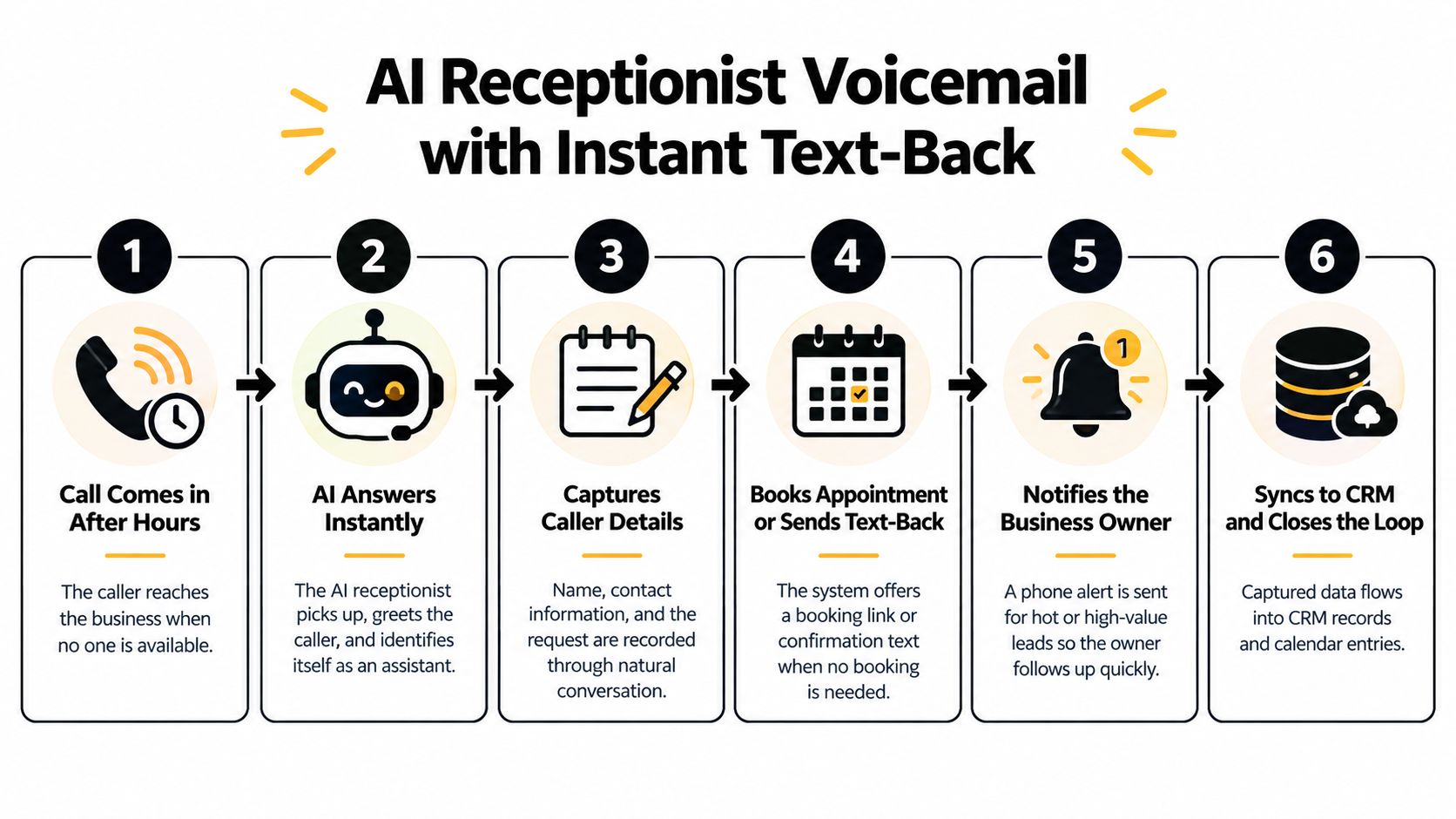
A static voicemail box loses callers who hang up before the beep, which is exactly the gap an AI receptionist with instant text-back closes. It answers, asks a few clear questions, captures the details, and books an appointment if that is the right next step. If the caller bails before the message is done, the system sends a text with next steps, so the lead does not sit idle.
Small teams feel that gap first. A solo HVAC operator can use this flow to collect after-hours estimate requests and get a call when a high-value job comes in. A two-attorney firm can capture case type and contact details, then route the file into the right CRM record for the next business day. For callers who prefer chat or write in another language, pairing the voice flow with 24/7 multilingual help keeps those leads from dropping.
SkipCalls' virtual receptionist for home services fits that handoff. It answers calls and texts, captures customer details, books appointments, and alerts the owner when a hot lead appears.
Clarity still matters. Tell callers early that they are speaking with an AI assistant. Connect the calendar and CRM before launch. Review transcripts each week for names, addresses, and odd phrasing that the system may hear wrong. Voice workflows usually fail in small ways first, and that is where a missed lead starts.
8. Personalized Voicemail for Solo Business Owners
A personal voicemail works when the business is really one person and the caller expects a human voice, not a reception desk. Consultants, massage therapists, and independent insurance agents often sound better with a short message in their own voice because it feels direct and credible. The goal is simple, build trust while the owner is unavailable.
A massage therapist might say, “Hi, it's Dana. I'm with clients right now, but I'll return your call by end of day. If you're looking to book, you can also text me at this number for an open time.” That gives the caller a name, a response window, and a backup path if they'd rather text.
Record it in a quiet room, keep it short, and update it when you're out sick or on vacation. A personal voicemail falls apart fast when it sounds stale, rushed, or outdated.
That's also where a light automation layer helps. A text-back or AI answering setup can catch the caller when you're with a client, so the personal tone stays intact without making the caller wait.
8-Point Comparison of Automated Voicemail Messages
| Voicemail Type | Implementation complexity | Resource requirements | Expected outcomes | Ideal use cases | Key advantages |
|---|---|---|---|---|---|
| Standard Greeting with Callback Request | Low, simple prerecorded script | Basic phone system; optional auto-text | Converts missed calls into actionable leads | General small businesses, front-desk light operations | Quick to set up; structured prompts improve callbacks |
| After-Hours Greeting with Next-Step Options | Low–Medium, schedule switching or auto-mode | Phone system with time-based routing; emergency routing/linking | Sets expectations and captures after-hours leads | Trades, salons, law firms with off-hours calls | Reduces caller frustration; preserves urgent routes |
| Appointment-Booking Voicemail | Medium, requires scheduling links or workflow | Calendar integration or manual booking workflow; texting | Increases bookings and reduces scheduling back-and-forth | Salons, spas, home services, clinics | Drives self-scheduling; speeds calendar fill |
| Lead-Qualification Voicemail for Real Estate and Insurance | Medium, IVR or short menu + tagging | IVR/menu, lead tagging, CRM integration desirable | Prioritizes high-intent prospects and shortens callbacks | Real estate agents, insurance agencies, sales teams | Focuses staff on high-value leads with contextual info |
| Emergency Triage Voicemail for Home Services and Law Firms | Medium, requires reliable on-call routing | On-call monitoring, emergency forwarding, testing | Protects response times for true emergencies | Plumbers, restoration services, criminal defense firms | Keeps emergencies prioritized; reduces non-urgent noise |
| Compliance-Aware Voicemail for Debt Collection | Medium–High, legal review and controls needed | Legal counsel, call-frequency controls, logging | Lowers regulatory risk while prompting callbacks | Debt collectors and regulated financial collections | Protects privacy and compliance; audit-friendly messaging |
| AI Receptionist Voicemail with Instant Text-Back | High, AI workflows and integrations | AI answering service, CRM/calendar integrations, escalation rules | Answers instantly, captures details, books appointments | Small teams, solo operators, businesses needing 24/7 coverage | Full coverage with booking and CRM sync; notifies on hot leads |
| Personalized Voicemail for Solo Business Owners | Low, owner-recorded message | Smartphone or basic phone system recording | Builds rapport and sets clear expectation for callbacks | Consultants, therapists, independent agents | Warm, trust-building tone; easy to update and maintain |
Test Each Greeting Before You Trust It
The only way to know whether a voicemail works is to test it on real missed calls. Change one element at a time, such as the greeting length, the callback promise, or the single action you want the caller to take, then compare the results against your real call log. If callers leave better details, book more often, or choose the right urgency path, the script is doing its job.
The strongest test is practical. A standard greeting might capture more callback requests, while an appointment-first version may book faster but lose callers who just wanted to ask a question. A triage message might protect your emergency line, but only if the forward works every time and the urgent path is obvious.
Keep checking after-hours and emergency routes each month. A broken route is worse than no route at all, because it gives the caller false confidence and wastes the one moment you had to keep the lead alive. If your team handles calls through voice and text, make sure the rules for both channels line up, especially when consent, urgency, and follow-up all overlap.
SkipCalls can fit into that testing process because it handles calls and texts, books appointments, and notifies you about hot leads by calling you. That makes it easier to compare greetings, routing, and response speed without bolting on separate systems for each step.
Choose the template that matches your most common missed call, put it live this week, and review it against actual outcomes. The right automated voicemail messages won't just sound good, they'll recover the lead, protect the business, and give the caller a clear next step.
Need a voicemail that captures the next call instead of losing it? SkipCalls answers calls and texts, books appointments, and flags hot leads so your team can respond without changing your number. If missed calls are costing you leads, visit SkipCalls and put a better voicemail workflow in place this week.