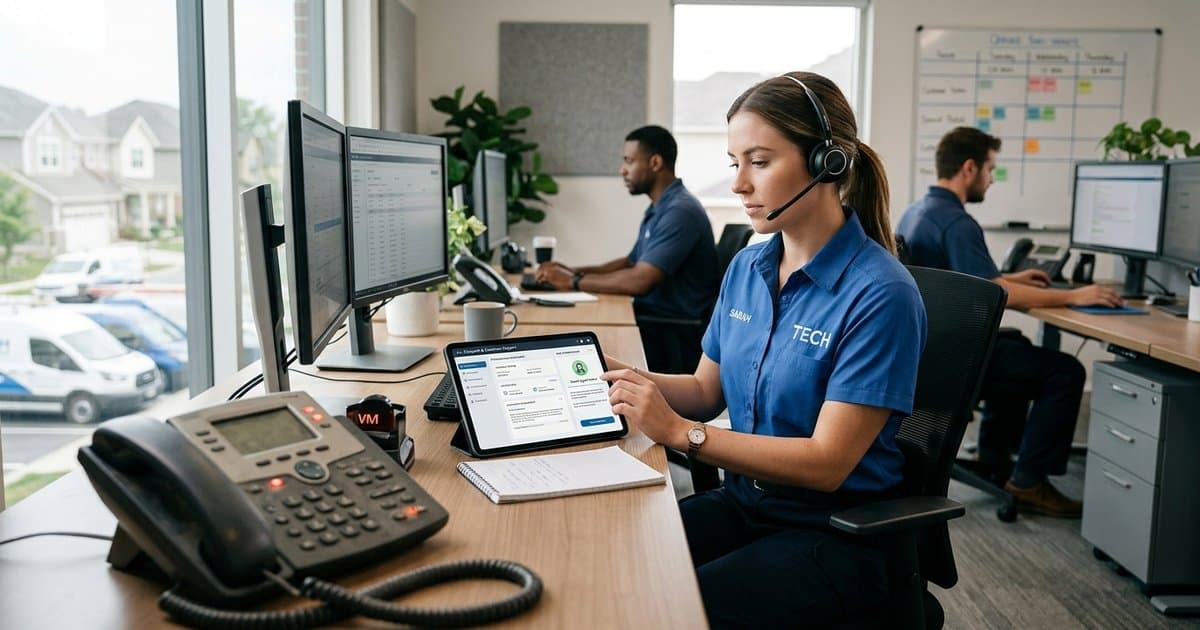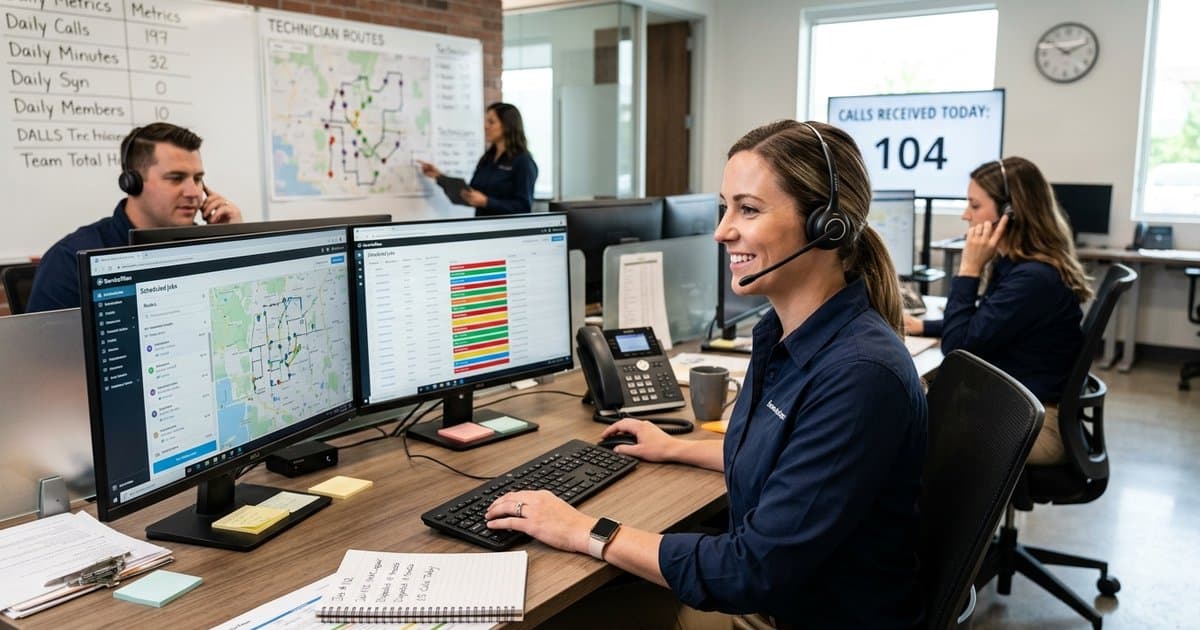
The Callback Fallacy: Why the "5-Minute Rule" Isn't Fast Enough for Contractors in 2026
Think calling back in 5 minutes is fast enough? Think again. New data shows why contractors who rely on callbacks lose 78% of jobs to competitors who answer instantly.
Picture this: You’re on a roof, or under a sink, or wiring a breaker panel. Your phone buzzes in your pocket.
You check the screen. It’s a local number. A potential new lead.
But you’re busy. You’re in the middle of a job. So you think, "I’ll let it go to voicemail and call them back in five minutes when I get to the truck."
Five minutes. That’s fast, right? That’s responsive. That’s what all the sales gurus preach.
Here is the hard truth: In 2026, five minutes is too late.
By the time you wipe your hands and dial that number back, that homeowner is already scheduling an estimate with your competitor. You didn't just miss a call; you lost a job.
This is the Callback Fallacy—the dangerous belief that returning calls quickly is the same as answering them instantly.
It’s not. And it’s costing you thousands of dollars a month.
The "Google LSA" Effect
To understand why the callback is dead, you have to look at how homeowners find you today.
Ten years ago, a customer might fill out a "Contact Us" form on three different websites. They expected a wait. In that world, calling back within 5 minutes was a superpower. It blew them away.
Today, they are searching on Google Local Services Ads (LSAs) on their iPhone. They see a list of plumbers or electricians with a little green checkmark. They tap "Call."
This is a high-intent moment. They have a problem right now. They have anxiety right now. They want a solution right now.
When you don't answer, they don't leave a voicemail and wait by the phone. They simply hang up, scroll down one inch, and tap the next button.
It’s not personal. It’s just the path of least resistance.
The Brutal Math of Missed Calls
Let’s look at the numbers. They aren't pretty for the "I'll call them back" strategy.
1. 78% of Jobs Go to the First Responder
According to data from Lead Connect, 78% of customers buy from the company that responds first.
Note the word "responds." In the context of a phone call, "response" means "answer." If you call back 10 minutes later, you are technically the second or third responder. You are fighting an uphill battle against the guy who already built rapport while you were checking your voicemail.
2. The "900% Drop"
Data from Hatch shows that after just five minutes, your odds of connecting with a lead drop by 900%.
Why? Because life moves fast. In five minutes, that homeowner has:
- Called your competitor
- Gotten distracted by their kids
- Driven into a tunnel
- Decided to "deal with it later"
The window of opportunity isn't a window anymore. It's a sliding door, and it shuts fast.
3. 85% Won't Call You Back
If you think, "If it's important, they'll leave a message," you're operating on outdated logic.
Dialzara's research highlights that 85% of people whose calls go unanswered will not call back. They won't leave a voicemail. They won't text. They just disappear.
These are "Silent Leads." You don't even know you lost them because they never left a trace. You just see a missed call notification and assume it was spam.
What Is The Callback Fallacy Costing You?
Step 1 of 3 • Takes 30 seconds
On a typical busy day, how often does your phone ring when you can't pick up?
When you're with a customer, under a house, on a ladder...
Don't stress about the exact number – a rough guess is perfect
What Is The Callback Fallacy Costing You?
Calculate how much revenue your business loses from missed phone calls. Most contractors lose $800-$1,500 per month from unanswered calls. SkipCalls AI phone answering costs only $199/year and captures every lead.
- Calculate how much money you lose from missed calls
- Average contractor loses $800-$1,500/month to unanswered calls
- SkipCalls AI answering costs only $199/year
- One captured job pays for 5+ years of service
The "Tag" You Can't Win
We've all played phone tag. It’s the worst game in business.
Minute 0: Customer calls you. You miss it. Minute 3: You call back. Customer is on the line with Competitor B. You go to their voicemail. Minute 15: Customer sees your missed call, calls you back. You're driving. Miss it again. Minute 45: You call back. They answer. "Oh, thanks, we already booked someone."
This back-and-forth burns your time, drains your energy, and kills your conversion rate.
The only way to win phone tag is never to start playing it.
Why "Hiring a Human" Isn't Always the Answer
So, you need to answer every call. The traditional solution is to hire a receptionist or an answering service.
That works, but it has holes:
- The Cost: A full-time receptionist costs $35,000–$45,000 a year. For a solo operator or small crew, that's a massive overhead spike.
- The Hours: Humans go home at 5 PM. But 27% of home service calls happen after hours or on weekends. If your receptionist clocks out, you're back to losing jobs.
- The Capacity: If two people call at once, the receptionist can only answer one. The other goes to voicemail. You still have a leak.
The New Standard: Instant AI Answering
This is where the industry is heading in 2026. It’s not about working harder; it’s about using tools that don't sleep.
SkipCalls was built to solve the Callback Fallacy. It’s an AI phone agent that lives on your phone.
When you can't pick up, SkipCalls answers instantly.
But it doesn't just play a recording. It talks.
Using advanced voice cloning, it sounds like you (or a professional receptionist). It has a real conversation. It asks about the leak, the wiring, or the roof. It checks your calendar. It books the appointment.
Most importantly: It stops the customer from calling the next guy.
The Difference Between "Fast" and "Instant"
- Fast Callback: You call back in 7 minutes. The customer is surprised but has already mentally moved on.
- Instant Answer: The customer feels relief. Their problem is being handled now. They stop searching. They stop stress-scrolling Google.
You have effectively taken them "off the market" in the first 30 seconds.
3 Steps to Kill the Callback Fallacy Today
You don't need to overhaul your entire business to fix this. Here are three practical steps to stop bleeding leads:
1. Audit Your Missed Calls
Go through your call log for the last 30 days. Count every missed call from a number you don't recognize.
Multiply that number by your average job profit (say, $300).
- 10 missed calls x $300 = $3,000 lost profit.
- And that's just one month. That's $36,000 a year.
Seeing the number makes it real. This isn't just "admin"—this is a hole in your pocket.
2. Update Your Voicemail (If You Must Keep It)
If you aren't ready for AI yet, at least change your voicemail greeting to be "action-oriented."
Bad: "Leave a message, I'll call you back." Better: "I'm on a job right now. Please send me a text at this number with your name and address, and I will reply instantly."
This pushes them to a channel (text) where you can respond faster than a voice call. It's not perfect, but it's better than the black hole of voicemail.
3. Try AI for One Week
Technology has moved past the clunky "press 1 for sales" bots.
SkipCalls offers a 7-day free trial. You can set it up in 5 minutes.
Just forward your calls to the AI when you're busy. See what happens.
- Watch it capture a lead while you’re sleeping.
- Watch it book an appointment while you’re driving.
- Watch it block a spam call that would have wasted your time.
The Bottom Line
Speed to lead is no longer about how fast you can dial. It's about whether you pick up the phone.
The contractor who answers is the contractor who wins. Don't let a 5-minute delay cost you a 5-figure year.
Ready to stop playing phone tag? Try SkipCalls free for 7 days and turn every ring into revenue.