The Bilingual Edge: How to Book Spanish-Speaking Jobs Without Speaking a Word
The Hispanic market holds $3.6 trillion in buying power. Learn how bilingual AI phone answering helps you book Spanish-speaking jobs without hiring extra staff.
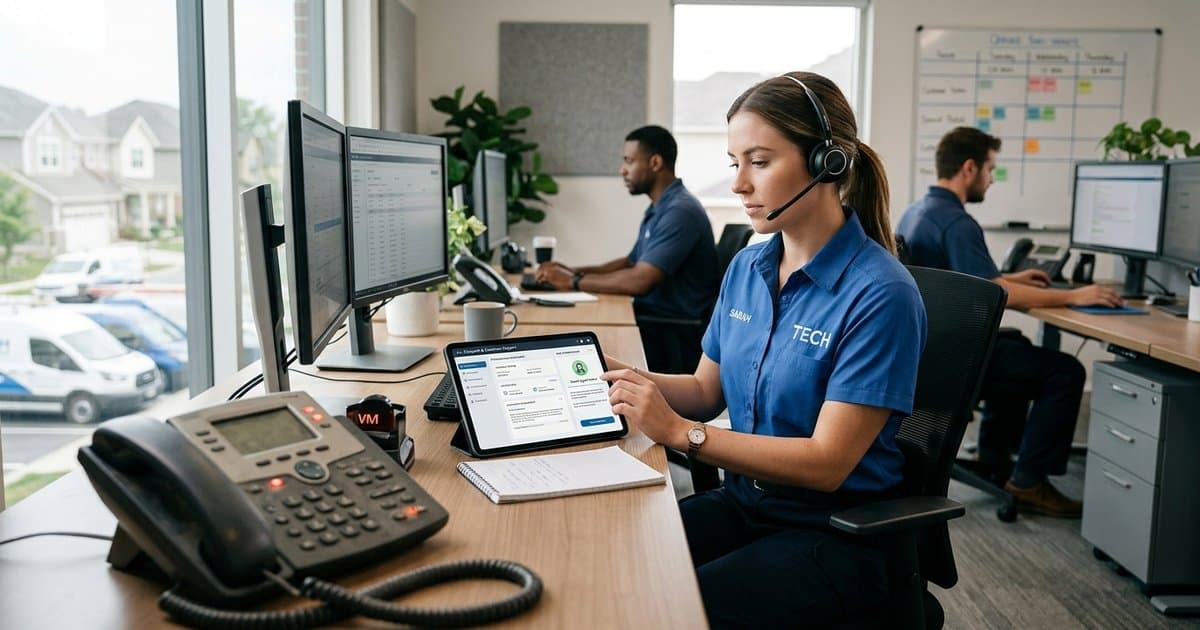
Imagine this scenario: Your phone rings while you're under a sink or up on a roof. You can't pick up, so it goes to voicemail.
The caller speaks Spanish. They hear your English voicemail greeting, hesitate for a second, and hang up. They don't leave a message. They just call the next number on Google until someone answers in a language they're comfortable with.
That click you just heard? That was the sound of a potential $5,000 job walking away to your competitor.
For years, contractors and small business owners have treated the language barrier as a "can't fix" problem. Unless you or your office manager spoke fluent Spanish, those leads were just considered lost causes.
But in 2026, the landscape has changed. The Hispanic market is booming, homeownership rates are climbing, and technology has finally provided a solution that doesn't require you to take night classes or hire a second receptionist.
Here is why ignoring Spanish-speaking callers is costing you more than you think—and how AI is fixing the problem.
The $3.6 Trillion Opportunity You're Missing
If you think the Spanish-speaking market is "niche," look at the numbers again.
According to recent data, the U.S. Hispanic population has a collective buying power of $3.6 trillion. That is not a typo. If the U.S. Latino economy were its own country, it would be the fifth-largest economy in the world, beating out the United Kingdom and India.
More importantly for trades and home services, this demographic is buying homes at a record pace. In 2024 alone, Hispanics accounted for 35% of the net growth in U.S. homeownership, adding 238,000 new homeowners in a single year.
These are new homeowners who need:
- Plumbers for renovations
- Electricians for upgrades
- HVAC technicians for repairs
- Landscapers for curb appeal
If your business phone system only speaks English, you are effectively hanging up on a massive chunk of your local market.
The Trust Gap: Why "English Only" Kills Conversions
It is not just about whether the customer can speak English. Many Hispanic homeowners are bilingual but prefer to conduct complex business—like explaining a water leak or negotiating a roof repair—in their native language.
Language is about trust. When a customer calls and hears a greeting in their own language, their anxiety drops. They feel understood. They feel confident that you can solve their problem without miscommunication.
Conversely, when they face a language barrier, they worry about:
- Being misunderstood about the problem
- Getting ripped off due to confusion
- Not being able to explain emergency details
This is why 64% of businesses report losing deals due to language barriers. In the high-trust world of home services, communication is everything. If you can't communicate, you can't close.
The Old Solution: Hiring Bilingual Staff (Expensive)
Traditionally, the only way to capture these leads was to hire a bilingual receptionist.
While effective, this is a heavy financial burden for a solo operator or small team. A full-time bilingual receptionist can easily cost $45,000 to $55,000 per year in salary, plus taxes and benefits.
Even if you use a call center, you're often paying premium per-minute rates for bilingual agents, and you're still limited by their operating hours. If a Spanish-speaking lead calls at 7 PM on a Friday, you're back to square one.
The Cost of Being Bilingual
The New Solution: AI That Speaks Their Language (And Yours)
This is where AI technology flips the script.
Modern AI phone answering systems like SkipCalls don't just "translate"—they converse. Here is how the workflow looks for a business owner who only speaks English:
- The Call Comes In: A Spanish-speaking homeowner calls your business number.
- AI Detects Language: The AI instantly recognizes the caller is speaking Spanish.
- Seamless Switch: It switches to fluent, natural-sounding Spanish to handle the call.
- The Booking: It answers questions, checks your calendar, and books the appointment—all in Spanish.
- The Handoff: You receive an instant text and email summary in English.
You get a notification: "Maria called about a leaking water heater. She is available Tuesday at 10 AM. Address: 123 Maple St."
You secured the job without ever having to struggle through a language barrier. You show up, do the work (where hand signals and basic phrases usually suffice), and get paid.
Why This Matters for Your Bottom Line
1. You Stop Losing Leads to Competitors
Most of your competitors are ignoring these calls. By simply having a system that says "Hola, ¿cómo puedo ayudarle?" instead of a robotic English voicemail, you automatically win the trust of the caller. You become the "friendly" option in your area.
2. You Expand Your Service Area
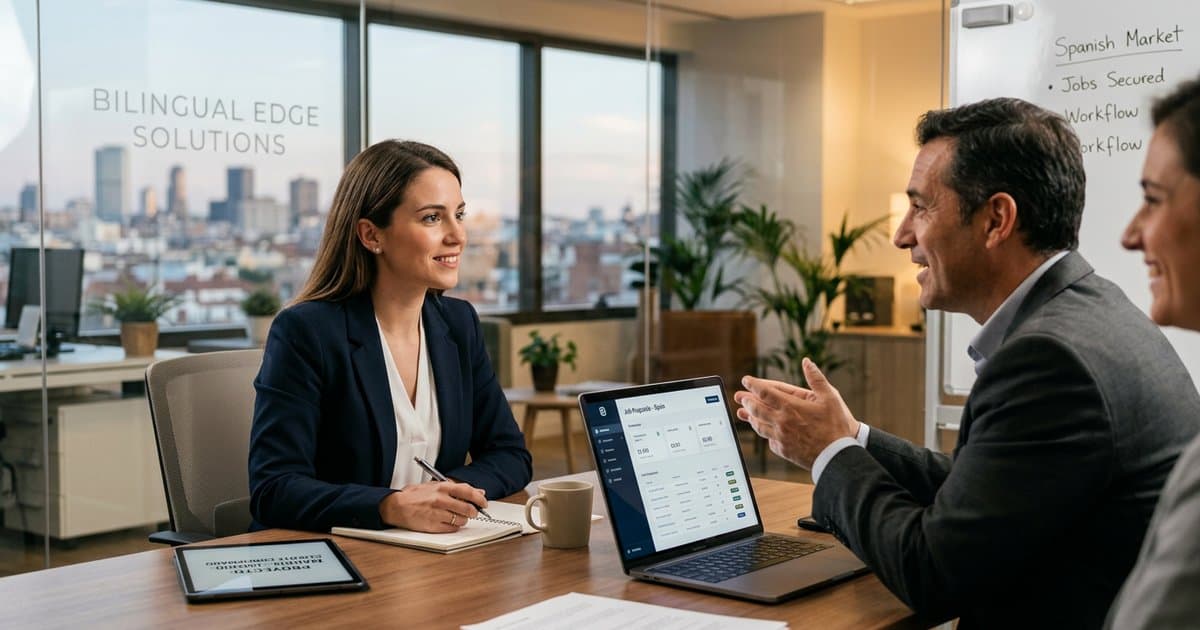
Many contractors avoid certain neighborhoods or demographics because they fear the communication gap. With bilingual support, you can confidently market to the entire population of your city, not just the English-speaking slice.
3. You Save on Admin Costs
Instead of hiring a dedicated person to handle these calls, you're automating the process for pennies on the dollar. It's the ultimate Small Business Automation hack.
Learn more: All Features.## Real World Example: The "Lost" Weekend Calls
Let's look at a real-world scenario.
A plumbing business in Texas was missing about 5-8 calls every weekend. They assumed these were just spam or wrong numbers. After installing an AI system with lead capture capabilities, they discovered that 3 of those calls were Spanish-speaking homeowners with emergencies.
- Average emergency job: $850
- Weekly recovered revenue: $2,550
- Annual impact: Over $130,000
Those weren't "bad leads." They were just leads that couldn't get through the front door.
Pro Tip: If you're running Google Ads (Local Services Ads), missing calls hurts your ad ranking. Answering every call—regardless of language—signals to Google that you are a responsive, high-quality business. This can lower your cost per lead significantly. Check out our Caller ID guide to understand how identifying leads helps.
How to Get Started with Bilingual AI
Setting this up doesn't require a degree in computer science. In fact, it's easier than setting up a new voicemail.
- Choose a Provider: Look for AI answering services that offer native-level multi-language support. (SkipCalls includes this in all plans).
- Enable Language Detection: In your dashboard, simply toggle "Multi-language Support" to ON.
- Test It: Have a Spanish-speaking friend call your business line. Watch how the AI adapts instantly.
- Read Your Summaries: Start getting English transcripts of Spanish calls delivered to your phone.
If you are currently using a basic answering machine or a generic phone answering service, you are likely paying more for less functionality.
The Verdict
The U.S. is changing, and the most successful businesses are the ones that adapt. You don't need to be fluent in Spanish to build a thriving business that serves the Hispanic community. You just need tools that bridge the gap.
By adding bilingual capabilities to your phone system, you aren't just being "inclusive"—you're making a smart, calculated financial decision to capture a market segment that has trillions of dollars to spend.
Don't let another $5,000 job hang up just because they didn't hear "Hola."
Ready to Capture Every Call?
SkipCalls provides industry-leading bilingual AI answering that sounds just like a human. It works 24/7, handles scheduling, and sends you English summaries of every conversation.
Try SkipCalls free for 7 days and see how many "lost" leads you can recover this week.



![SkipCalls vs Dialzara: Current Plan Comparison [2026]](/_next/image?url=%2Fblog%2Fskipcalls-vs-dialzara-cover.jpeg&w=3840&q=75)