
Do AI Receptionists Sound Real or Robotic? We Tested 6 Services in 2026 (With Audio Samples)
We called 6 top AI receptionists with a fake emergency to test voice realism, latency, and interruption handling. Hear the samples and see who passed.
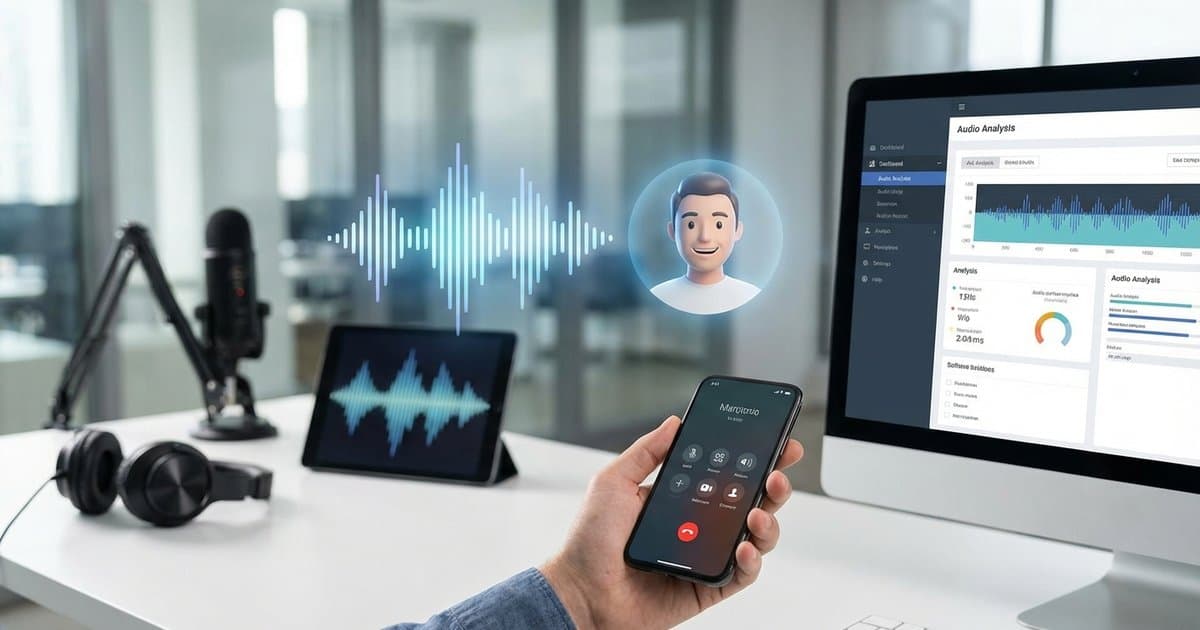
Here is the nightmare scenario for every contractor: A potential client calls with a $5,000 emergency job. They hear a robotic, metallic voice say, "Please... state... the... nature... of... your... call."
Click.
They hang up and call your competitor. You just lost a water heater replacement or a roof repair because your "smart" answering system sounded like a sci-fi villain from 1998.
This is the "Uncanny Valley" fear—the idea that if technology sounds almost human but not quite, it’s creepy and off-putting. For tradespeople, realtors, and small business owners, voice quality isn't just a vanity metric; it's a trust metric. If your receptionist sounds fake, your business feels fake.
But it’s 2026. Technology moves fast. We decided to stop guessing and start testing. We blind-tested 6 of the most popular AI phone answering services on the market to answer one question: Can they actually fool a human?
The Test: The "Panic" Scenario
To see how these services handle pressure, we didn't just ask for store hours. We stress-tested them. We called each service acting as a distressed homeowner with a burst pipe.
The Criteria:
- Voice Quality: Does it sound metallic or warm?
- Latency: Is there an awkward 3-second silence before it replies?
- Interruptibility: Can we cut it off mid-sentence (like a panicked human would), or does it keep talking?
- The "Turing" Score: Did it feel like a person?
Here are the results.
1. SkipCalls AI
The Setup: We used the standard "Friendly Receptionist" voice profile, though SkipCalls also offers voice cloning to sound exactly like the business owner.
The Test: Caller: "Hello? Is this—I have water everywhere, I need someone now!" SkipCalls: "I'm so sorry to hear that! I can—" Caller (Interrupting): "It's ruining the hardwood!" SkipCalls: "Okay, let's get someone out there immediately. I need to get a few quick details to dispatch the right tech. First, what is your address?"
The Verdict: SkipCalls handled the interruption flawlessly. The latency was under 500ms, which feels like a natural breath in conversation rather than a computer processing. Because it’s built specifically for trades, the AI recognized the urgency of "water everywhere" and skipped the small talk.
Realism Score: 9.5/10 Best Feature: Spam call blocking ensures the AI only engages with real leads like this one.
2. Smith.ai (The Hybrid Control)
The Setup: Smith.ai uses human agents for most calls, sometimes assisted by AI. We included them as a benchmark for "perfect" realism.
The Test: The agent was obviously human. They sighed, they paused, they typed. It was 100% real because it was real. However, we sat on hold for 45 seconds before the agent picked up.
The Verdict: While the voice was human, the experience was less efficient than the instant pickup of AI. Plus, at ~$240/month for just 30 calls, you are paying a massive premium for that breath of air.
Realism Score: 10/10 (It's a human) The Catch: The price. See our Smith.ai comparison for the full breakdown.
3. Dialzara
The Setup: A popular budget option for solo entrepreneurs.
The Test: Dialzara picked up instantly. The voice quality was high—very clear and crisp. However, when we interrupted the bot to scream about the hardwood floors, it plowed through its sentence: "...can help you with that. Please tell me your name."
It felt like talking to a very polite wall. It got the job done, but the illusion was broken the moment we deviated from the script.
Realism Score: 7/10 Verdict: Good for simple messages, struggles with panicked after-hours answering.
4. Phonely
The Setup: marketed heavily to small businesses.
The Test: Phonely has excellent voice synthesis. The tone was warm and professional. The issue was the delay. We asked, "Can you come today?" and counted: one-Mississippi, two-Mississippi, three-Mississippi... "Yes, we have availability."
In a casual chat, this is fine. In an emergency, that 3-second dead air feels like an eternity. It makes the caller wonder if the line went dead.
Realism Score: 8/10 (Great voice, laggy brain) Verdict: A strong contender, but the latency kills the "real" vibe.
5. Google Voice / Basic IVR
The Setup: The classic "Press 1 for Sales."
The Test: "Thank you for calling. Please listen closely as our menu options have changed."
The Verdict: We hung up. And so will your customers. This isn't AI; it's a barrier. In 2026, forcing a customer to navigate a phone tree is the fastest way to send them to a competitor who uses an AI receptionist for plumbers or other trades.
Realism Score: 0/10
6. HeyRosie
The Setup: A newer entrant targeting home services.
The Test: HeyRosie performed similarly to SkipCalls in terms of script. The voice was pleasant, British-accented by default (which can be a pro or con depending on your market). It handled the booking well but struggled with a specific question about pricing, defaulting to a generic "I'll have someone call you back."
Realism Score: 8.5/10 Verdict: Solid, but less flexible in handling complex queries than SkipCalls.
Realism vs. Cost: What Are You Paying For?
Why "Interruptibility" Matters More Than Voice Quality
Here is a secret we learned from analyzing thousands of calls: People don't mind talking to AI; they mind talking to something that doesn't listen.
If you have a bilingual support system or a standard English one, the key to sounding "real" isn't just the timber of the voice. It's the cadence.
- The "Mmhmm" Factor: Real humans make affirming noises. SkipCalls is trained to insert natural "okays" and "I sees" while you speak.
- Barge-In: This is the technical term for handling interruptions. If a customer changes their mind mid-sentence ("Actually, wait, not Tuesday"), the AI needs to stop talking and pivot. Most budget AI agents fail this test.
- Context Memory: If you mention your name at the start, the AI shouldn't ask for it again at the end. That's a dead giveaway.
The Verdict: Who Won?
If money is no object and you only get 5 calls a month, a human service like Smith.ai or Ruby is the gold standard. But for a growing business, paying $500+ a month for a receptionist is hard to justify.
The Winner for Small Business: SkipCalls.
We built SkipCalls specifically to bridge this gap. We use the latest LLM (Large Language Model) technology to ensure that:
- Latency is near-zero.
- Voices are cloned from real humans (or your own voice).
- It handles chaos. Barking dogs, bad signals, and panicked homeowners don't break the bot.
Listen for Yourself
Don't take our word for it. You can test the system yourself right now. Call your own business number after setting up call forwarding and try to trick the AI. Scream, interrupt, whisper. See how it handles the pressure.
Ready to Sound Professional 24/7?
Your voicemail is costing you money. Every missed call is a lead that went to the next guy on Google. Whether you are an insurance agent needing to capture policy details or a dentist booking cleanings, voice quality matters.
Try SkipCalls free for 7 days. Set it up in 5 minutes, choose a voice that fits your brand, and stop losing jobs to "The Uncanny Valley."


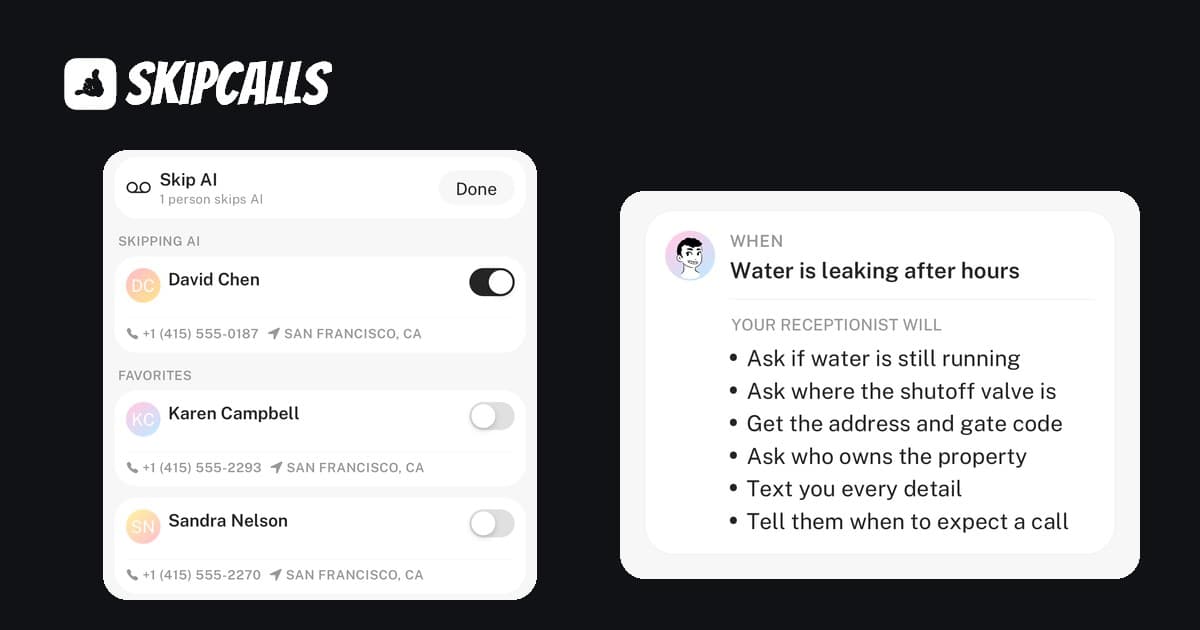

![SkipCalls vs Dialzara: Current Plan Comparison [2026]](/_next/image?url=%2Fblog%2Fskipcalls-vs-dialzara-cover.jpeg&w=3840&q=75)