Google Voice vs AI Receptionist: Which One Actually Books Appointments?
Is Google Voice enough for your small business? We compare Google Voice vs AI Receptionists to see which one actually captures leads and books appointments.
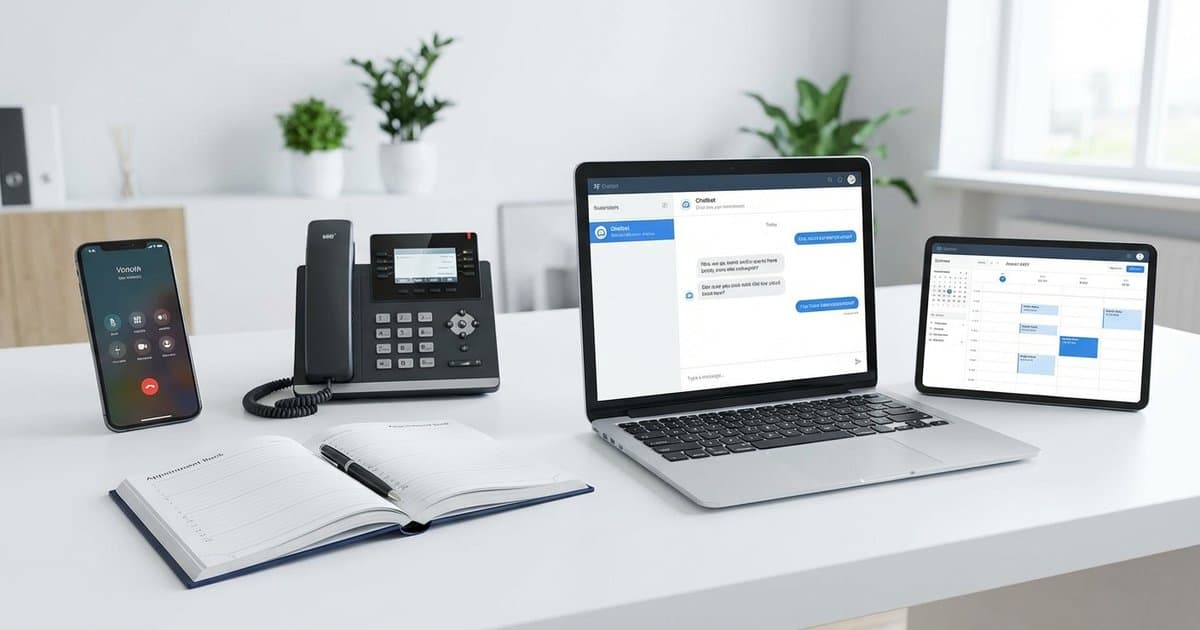
If you're like most small business owners, you probably started with Google Voice. It’s free (or very cheap), easy to set up, and gives you a separate business number so you aren't giving your personal cell to every random caller.
But here is the hard truth that most contractors, realtors, and tradespeople discover too late: Google Voice is a passive tool. It waits for you to pick up. If you don't, it sends the caller to voicemail.
And in 2026, voicemail is where leads go to die.
Statistics show that 80% of callers hang up when they reach voicemail. They don't leave a message; they just call the next business on Google. If you are relying on Google Voice to catch your overflow calls, you aren't capturing leads—you're just collecting missed call notifications.
Enter the AI Receptionist. Unlike a standard VoIP service, an AI receptionist is an active tool. It answers the phone, talks to your clients, and books appointments while you're on a roof, under a sink, or at a family dinner.
In this guide, we’ll break down the real difference between sticking with basic Google Voice vs. upgrading to an AI receptionist like SkipCalls, and which one actually puts money in your pocket.
The "Free" Trap of Google Voice
Google Voice is an excellent tool for communication, but it is a terrible tool for lead conversion.
It was designed to be a phone number—a utility. It connects call A to person B. If person B (you) is busy, the utility has done its job, and the call ends in voicemail.
For a solo operator, this creates a dangerous bottleneck. You are the only person who can answer the phone. When you are working, driving, or sleeping, your business is effectively closed.
The Google Voice Workflow:
- Customer calls.
- You are busy working.
- Phone rings 4-5 times.
- "Please leave a message after the beep."
- Click. (Customer hangs up).
That "click" is the sound of revenue leaving your business.
The Voicemail Problem: By the Numbers
Why is voicemail such a deal-breaker? Because we live in the Amazon Prime era. Customers expect instant gratification. If they have a leaky pipe or a broken AC, they want a solution now, not a callback in three hours.
- 80% of callers hang up when they reach voicemail.
- 38% of all business calls go unanswered completely.
- Response time matters: You are 21x more likely to qualify a lead if you respond within 5 minutes.
If you're using Google Voice, you're likely playing phone tag hours after the initial call. By then, your competitor—the one who answered the phone—has already booked the job.
Enter the AI Receptionist: The Active Solution
An AI receptionist is not just a phone system; it's a digital employee. When you can't pick up, the AI answers instantly. It sounds human, understands context, and can actually do things.
The SkipCalls Workflow:
- Customer calls.
- You are busy working.
- SkipCalls answers instantly: "Thanks for calling Mike's Plumbing. How can I help you today?"
- Customer: "I have a leak under my sink."
- AI: "I can help with that. Are you looking to book an emergency repair?"
- Appointment Booked.
Instead of a missed call notification, you get a calendar invite and a new job.
The Cost of Missed Calls
Feature Showdown: Google Voice vs. SkipCalls
Let's look at the specific features that matter for growing a business.
1. Appointment Scheduling
- Google Voice: Zero capability. It cannot see your calendar or book time.
- SkipCalls: Integrates directly with your calendar. The AI can check your availability in real-time and book appointment scheduling slots without you ever touching your phone.
2. Spam Protection
- Google Voice: Has a basic spam filter that sends suspected spam to voicemail. It's decent, but "suspected" calls still ring your phone and distract you.
- SkipCalls: Uses advanced AI to screen calls. It listens to the caller's intent. If it's a robocall, it blocks it. If it's a real lead, it puts them through or books them. This is a massive time-saver for anyone dealing with spam calls.
3. After-Hours Support
- Google Voice: You can set "Do Not Disturb" hours, which just sends people straight to voicemail faster. It doesn't actually help the client.
- SkipCalls: Provides true 24/7 coverage. Whether it's 2 AM on a Tuesday or Christmas morning, your business is "open" to take bookings. This is crucial for emergency trades like plumbers or HVAC techs.
4. Professionalism
- Google Voice: Often announces "Call from Google Voice" when you pick up, which screams "small business."
- SkipCalls: You can customize the voice and script. The AI sounds professional, polite, and consistent every single time. It gives the impression of a larger, more established company.
The Hybrid Strategy: Keep Your Number, Upgrade Your Brain
Here is the best part: You don't have to choose.
You can keep your Google Voice number—it's already on your truck wraps and business cards. You simply set up Call Forwarding from Google Voice to your SkipCalls number.
If Google Voice is only forwarding calls from a lead-gen campaign, SkipCalls can add AI qualification before the call reaches a contractor or buyer.
How to set it up:
- Keep your Google Voice number as your public-facing business line.
- In Google Voice settings, set it to forward calls to your SkipCalls number if you don't answer.
- Turn off Google Voice voicemail so the AI picks up instead.
This gives you the best of both worlds: the cheap, established number of Google Voice, with the AI phone answering power of SkipCalls.
ROI: When Does AI Pay for Itself?
Let's do the math.
Google Voice is roughly $10/month for the business starter plan (or free for personal). SkipCalls is roughly $16/month (on the annual plan).
The difference is the price of a fancy coffee.
Now, ask yourself: What is one new client worth?
- If you're a handyman, maybe $150.
- If you're a roofer, maybe $15,000.
- If you're a lawyer, maybe $2,500.
If the AI receptionist captures just one single job per year that would have otherwise hung up on your voicemail, the service has paid for itself for the next five years.
Compare this to a human receptionist, which costs $30,000+ per year. AI provides 90% of the value for 1% of the cost.
Is SkipCalls Right for You?
If you are a solo operator or run a small team, you are likely losing money every time your phone goes to voicemail. Google Voice is a great utility, but it's not a sales agent.
Switch to an AI receptionist if:
- You miss more than 3 calls a week.
- You work with your hands and can't always answer.
- You want to stop playing phone tag.
- You need message taking that is accurate and instant.
Stick with basic Google Voice if:
- You have zero budget.
- You rarely get inbound business calls.
- You answer 100% of calls yourself, instantly.
Ready to Stop Missing Leads?
Don't let your next big job end in a "beep." Upgrade your phone system from a passive voicemail box to an active revenue generator.
Try SkipCalls free for 7 days and see how many appointments you can book while you sleep.