The Pay-Per-Minute Trap: Why Contractors Are Overpaying for AI Phone Answering Services
Are you overpaying for your AI phone answering service? Learn why contractors are ditching per-minute billing for affordable, flat-rate AI receptionists.
I keep seeing the exact same scenario play out on plumbing and HVAC forums. A business owner finally decides they're tired of missing calls while on the job site. They sign up for a popular AI virtual receptionist service. The first week feels like a revelation—no more pulling over to answer the phone while driving between jobs.
Then the first monthly bill arrives.
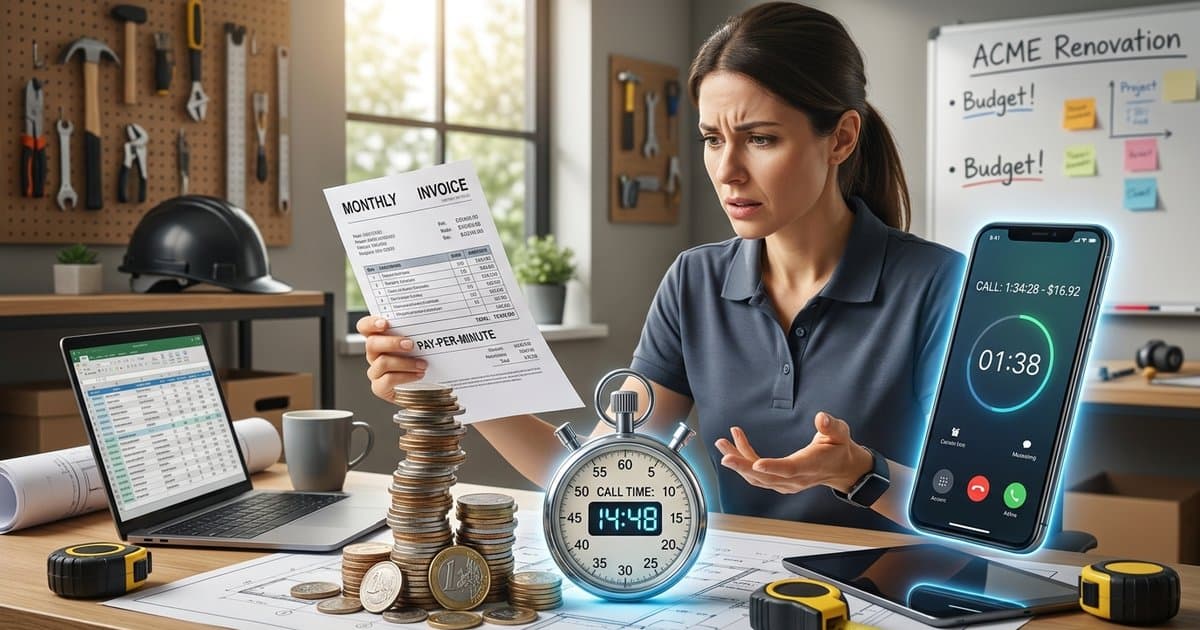
Instead of the advertised $30 base rate, the invoice is $240. Why? Because they got hit with per-minute overage charges. They paid for wrong numbers. They paid for a 12-minute conversation where the AI patiently listened to an elderly customer complain about their previous plumber. They even paid for spam calls that slipped through the cracks.
The cost of an AI receptionist for business shouldn't punish you for actually getting phone calls. But right now, the industry standard pricing model is actively working against small contractors.
The Problem with the "Standard" Pricing Model
If you look at the top AI receptionist providers today—especially if you're researching a Dialzara alternative or a Nexa alternative—almost all of them use a metered billing system. You generally see two models:
Per-Minute Billing: You buy a bucket of minutes (usually 50 to 100). Once you burn through them, you pay anywhere from $1.50 to $3.00 for every additional minute.
Per-Call Billing: You pay a flat rate per interaction. Some hybrid services charge upwards of $95 a month just for access, plus $1.90 for every single call they answer.
There is something inherently flawed about this setup for home service businesses. Contractors experience massive seasonal spikes. An HVAC tech in Arizona is going to get hammered with calls in July. Under a metered plan, your busiest (and most stressful) month is also the month your software bill triples. You're effectively being taxed for running a successful marketing campaign or dealing with a local weather emergency.
Why You Can't Just Go Back to Voicemail
When contractors get fed up with unpredictable bills, the temptation is to cancel the service and go back to a standard voicemail greeting.
I genuinely don't recommend this. The data on how modern customers treat voicemail is pretty brutal.
According to recent tracking by OpenCall AI, 80% of mobile business calls go to voicemail, but only 20% of those callers actually leave a message. The rest just hang up and call the next search result on Google.
The financial hit is severe. Industry data from DeanTek shows that 62% of calls to contractors go unanswered when crews are out on job sites. They calculate that the average contractor loses roughly $3,800 a month in potential revenue simply from missed calls.
You need an AI phone answering service for your small business. You just don't need one that holds your wallet hostage.
The Real Cost of Call Answering
The Hidden Costs Nobody Mentions
When you dig into the terms of service for many AI call answering and routing solutions, you find some frustrating technicalities.
The Spam Tax: Robocalls are a massive problem for local business numbers. Many metered AI services will charge you for the 30 seconds it takes the bot to figure out it's talking to a recorded warranty scam. If you get 10 spam calls a week, you're paying real money just to be annoyed.
The Chatty Caller Penalty: Homeowners often don't know exactly what's wrong with their pipes or wiring. They want to explain the entire history of their house before getting to the point. With a human receptionist on a fixed salary (which varies wildly depending on the receptionist salary by state), this is just part of the job. With a per-minute AI, you are literally watching a meter run while a customer talks. Having a reliable call transcription feature is great, but not if you're paying $2 a minute to generate it.
The Setup Fees: Several platforms require you to pay a "white-glove onboarding" fee to build your call flows. This can run anywhere from $100 to $500 before the system even takes its first call.
A Better Way: Unlimited Flat-Rate Answering
I don't think small businesses should have to do complex math every time their phone rings. That's exactly why SkipCalls threw out the metered pricing model completely.
We built an app that operates on a simple premise: one flat rate, unlimited minutes.
For $199 a year (which breaks down to about $199 per year), SkipCalls handles every single call that comes in. Whether you get 10 calls a week or 100 calls a day during a freeze, your price never changes.
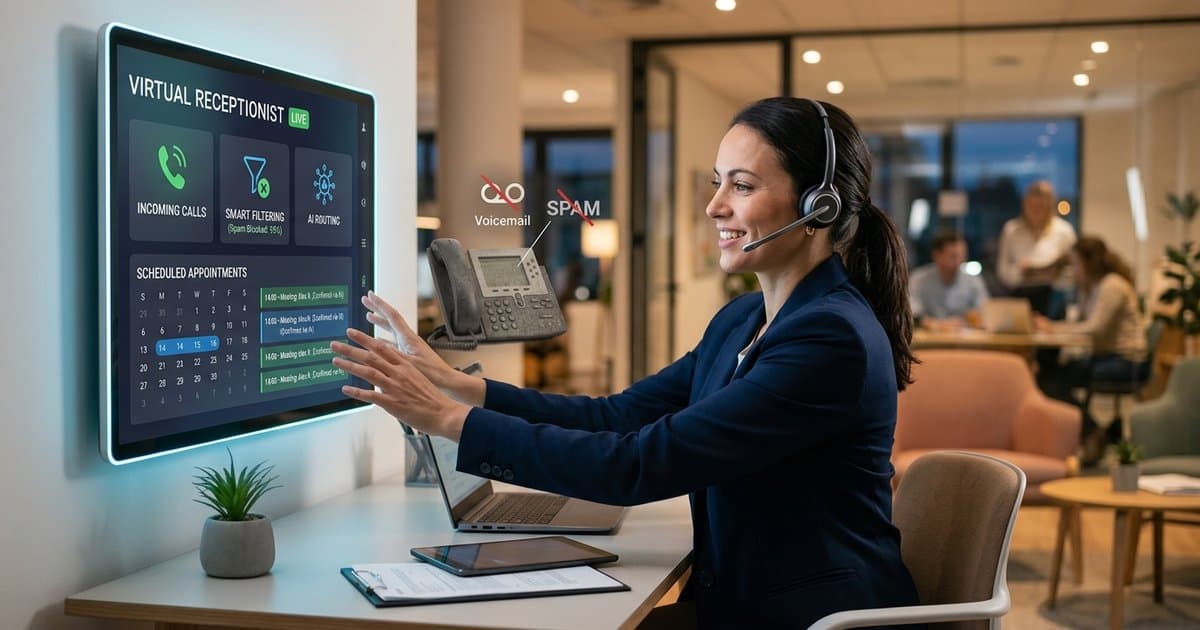
The system uses advanced voice cloning (which is quickly becoming a secret weapon for contractors) so it actually sounds like you, not a generic robot. It checks your availability, handles the appointment confirmations, and blocks spam automatically. The spam blocking alone usually saves our users an hour a week. And unlike metered services, we don't charge you for the privilege of hanging up on telemarketers.
If you're looking into phone answering service pricing, the math is pretty undeniable. One captured $500 plumbing job pays for over two years of the service.
What to Look For Before You Sign Up
If you're comparing AI receptionist software reviews right now, ignore the marketing fluff and look directly at the pricing page. If you're an outdoor contractor looking for an AI receptionist for fence companies or home inspectors, you know weather dictates your call volume. Ask these three questions:
- What happens when I hit my minute limit? If the answer is "we automatically charge your card for another block of minutes," walk away.
- Do I pay for wrong numbers? If the provider can't automatically filter and discard spam without charging your account, their tech isn't built for local businesses.
- Is the setup actually free? You shouldn't need a developer to set up call forwarding. It should take five minutes on your smartphone.
Key Takeaways
The technology behind intelligent virtual receptionist software has gotten incredibly good over the last year. But the pricing models haven't caught up to reality.
- The average contractor loses $3,800 a month to missed calls.
- Going to voicemail is a guaranteed way to lose 85% of your leads.
- Metered AI services penalize you for busy seasons, chatty customers, and spam calls.
- Flat-rate, unlimited services provide predictable costs without the anxiety.
You don't need to pay call-center prices to get professional front-desk coverage. Stop letting software companies tax your phone lines.
Ready to see what affordable AI receptionist services actually look like? Try SkipCalls free for 7 days and let us handle the phones while you handle the jobs.


![SkipCalls vs Dialzara: Current Plan Comparison [2026]](/_next/image?url=%2Fblog%2Fskipcalls-vs-dialzara-cover.jpeg&w=3840&q=75)